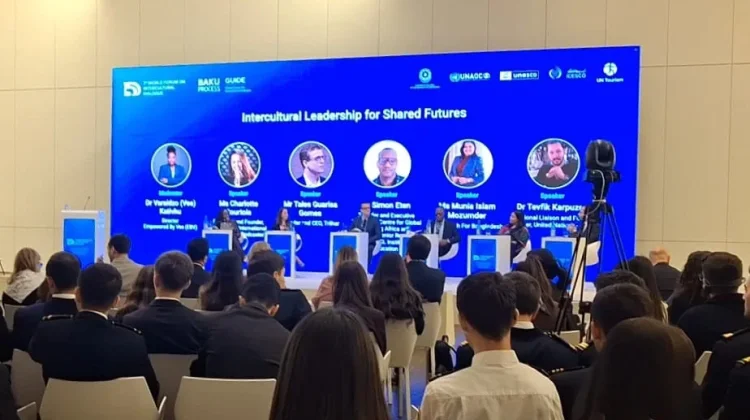
Baku Intercultural Dialogue Forum Highlights Leadership and Tolerance Among Young People
BAKU – The 7th World Forum on Intercultural Dialogue, held in Baku, Azerbaijan, has received a positive response from local youth. The international gathering provided a platform for young people from diverse backgrounds to exchange ideas, explore different cultural perspectives, and strengthen their commitment to building a peaceful future.
The event took place at the Heydar Aliyev Center on Wednesday, October 28, 2026. Through a series of discussions, the forum offered participants an opportunity to broaden their horizons, gain insights from different countries, and explore leadership challenges in an increasingly diverse global society.
Cavadlı Mirali, a student at the National Aviation Academy, described the forum as a valuable experience for young people, particularly university students. He had the opportunity to meet participants from various countries, learn about different cultures, and engage with discussions on topics relevant to young people’s lives and future aspirations.
One of the subjects that particularly captured Mirali’s attention was time management and planning. He emphasized the practical value of these skills in everyday life, from setting priorities to developing strategies for achieving personal goals.
A similar perspective was shared by Jale Melikova, a student at Azerbaijan State Pedagogical University. She welcomed the international gathering and expressed pride in seeing Azerbaijan host an event that brought together people from diverse cultural backgrounds.
According to Melikova, intercultural engagement allows young people to develop a more open-minded understanding of differences. Such experiences can help foster mutual respect and encourage collaboration in pursuit of a better future.
Leadership Begins with Honesty and the Ability to Listen
Beyond providing a platform for cultural exchange, the forum also addressed leadership through a session titled Future Intercultural Leadership.
Charlotte Courtois, founder of the non-governmental organization Konstelacio, highlighted the importance of honesty in effective leadership. She emphasized that leaders must have the courage to acknowledge their vulnerabilities and limitations, particularly when building trust amid uncertainty.
Courtois suggested that leadership is not always about providing answers or giving directions. Instead, effective leaders must also know how to ask the right questions, creating opportunities for new ideas to emerge and encouraging others to participate in decision-making.
The ability to listen is equally essential. By genuinely considering different perspectives, leaders can make more thoughtful decisions and better understand the needs and interests of the people they serve.
Intercultural Dialogue as a Foundation for the Future
The forum in Baku underscored the important role of intercultural dialogue in fostering harmonious relationships in an increasingly interconnected world. The exchange of ideas not only broadens participants’ knowledge but also promotes mutual understanding and helps reduce misunderstandings arising from cultural differences.
As technology advances and social change accelerates, leadership challenges are becoming increasingly complex. Technological progress must therefore be accompanied by strong human values, integrity, empathy, and responsibility to ensure that innovation delivers meaningful benefits to society.
For young people, participating in international forums can provide valuable experience and prepare them to take on greater roles in social development, education, and leadership. A peaceful future depends not only on decisions made by world leaders but also on each generation’s willingness to engage in dialogue, cooperate, and respect differences.
Through open and sustained dialogue, cultural diversity can become a shared strength, helping build a more inclusive, equitable, and humane world.