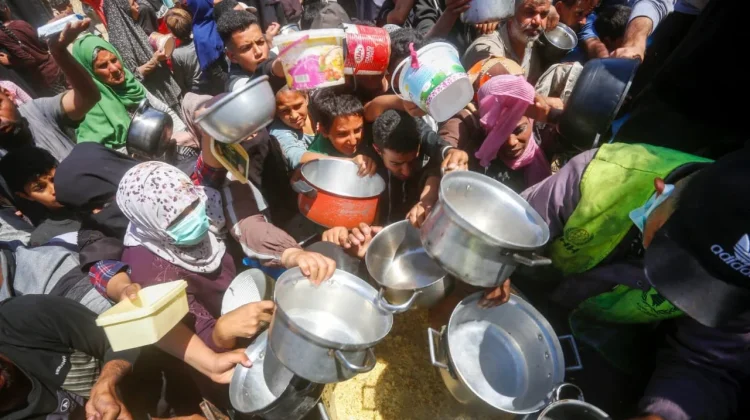
WFP Cuts Food Aid in Gaza, Leaving 500,000 Palestinians Without Monthly Assistance
GAZA – The United Nations World Food Programme (WFP) has reduced food assistance for Palestinians in the Gaza Strip due to funding shortages. The decision is expected to leave approximately 500,000 people without monthly food aid at a time when humanitarian conditions remain critical.
According to Reuters on Wednesday, October 21, 2026, the number of monthly food assistance recipients has fallen from 1.6 million to 1.1 million. The cuts come as a large proportion of Gaza’s population continues to struggle to obtain sufficient food for daily survival.
In addition to reducing the number of beneficiaries, WFP has cut food rations by half. Cash assistance for approximately 75,000 families has also been reduced. Meanwhile, the daily distribution of ready-to-eat meals for people unable to cook has dropped from 250,000 to 150,000 portions.
The impact is particularly severe for communities in areas that are difficult to reach. Some families now receive ready-to-eat meals only once every two days, further limiting their ability to meet basic nutritional needs.
Millions of Palestinians Remain at Risk of Hunger
WFP estimates that approximately 1.4 million people, or two-thirds of Gaza’s population, are experiencing Crisis-level food insecurity or worse. This figure includes around 200,000 people facing Emergency-level food insecurity.
The figures highlight the persistent gap between humanitarian needs and available assistance in Gaza. Limited access to food, adequate shelter, and essential services continues to place enormous pressure on civilians, particularly families who have lost their homes and livelihoods during the prolonged conflict.
The aid reductions are taking place despite a ceasefire agreement that has been in effect for a year. Although the agreement includes plans to rebuild Gaza, implementation has encountered significant obstacles. Issues surrounding Hamas’s disarmament and the withdrawal of Israeli forces remain among the challenges that have yet to see substantial progress.
Displaced Families Face Harsh Conditions Ahead of Winter
WFP Executive Director Carl Skau has described daily life in Gaza as extremely difficult. Residents continue to face shortages of adequate shelter, limited access to essential services, and persistent uncertainty over their safety and security.
The situation is becoming increasingly concerning as Palestinians prepare for their fourth winter since the conflict began. Families living in tents and temporary shelters face additional risks from cold temperatures and inadequate living conditions, particularly children, older people, and other vulnerable groups.
Under these circumstances, maintaining food assistance is an urgent priority. Reduced food distributions could place even greater pressure on households that have already lost their ability to meet basic needs independently.
WFP Needs US$450 Million to Sustain Humanitarian Operations
WFP estimates that it needs US$450 million, equivalent to approximately Rp8 trillion, over the next six months to sustain essential humanitarian operations in Gaza and the Israeli-occupied West Bank.
The funding is necessary to maintain critical assistance programs as humanitarian needs continue to grow. WFP has called on the international community to increase its support to sustain food deliveries and facilitate early recovery efforts in areas affected by the conflict.
Meanwhile, the security situation remains a major obstacle. Israeli forces reportedly continue to control more than 60 percent of Gaza’s territory, while airstrikes continue to occur almost daily, according to the report underlying this article.
These circumstances demonstrate that a ceasefire does not automatically restore normal life for civilians. Humanitarian access, security guarantees, infrastructure recovery, and the availability of adequate shelter remain fundamental challenges requiring sustained attention.
The WFP’s decision to reduce food assistance underscores that Gaza’s humanitarian crisis is not solely a consequence of armed conflict. It is also closely linked to the availability of funding needed to meet the population’s most basic needs.
Continued international support is essential to help ensure that Palestinian families retain access to food, particularly as they face another winter amid increasingly difficult living conditions.